
Winter-Proof Your Outdoor Lighting: A UK Checklist for Porches, Paths and Patios
A practical UK guide to getting porch, path and patio lights through winter — IP ratings, seals, timers...

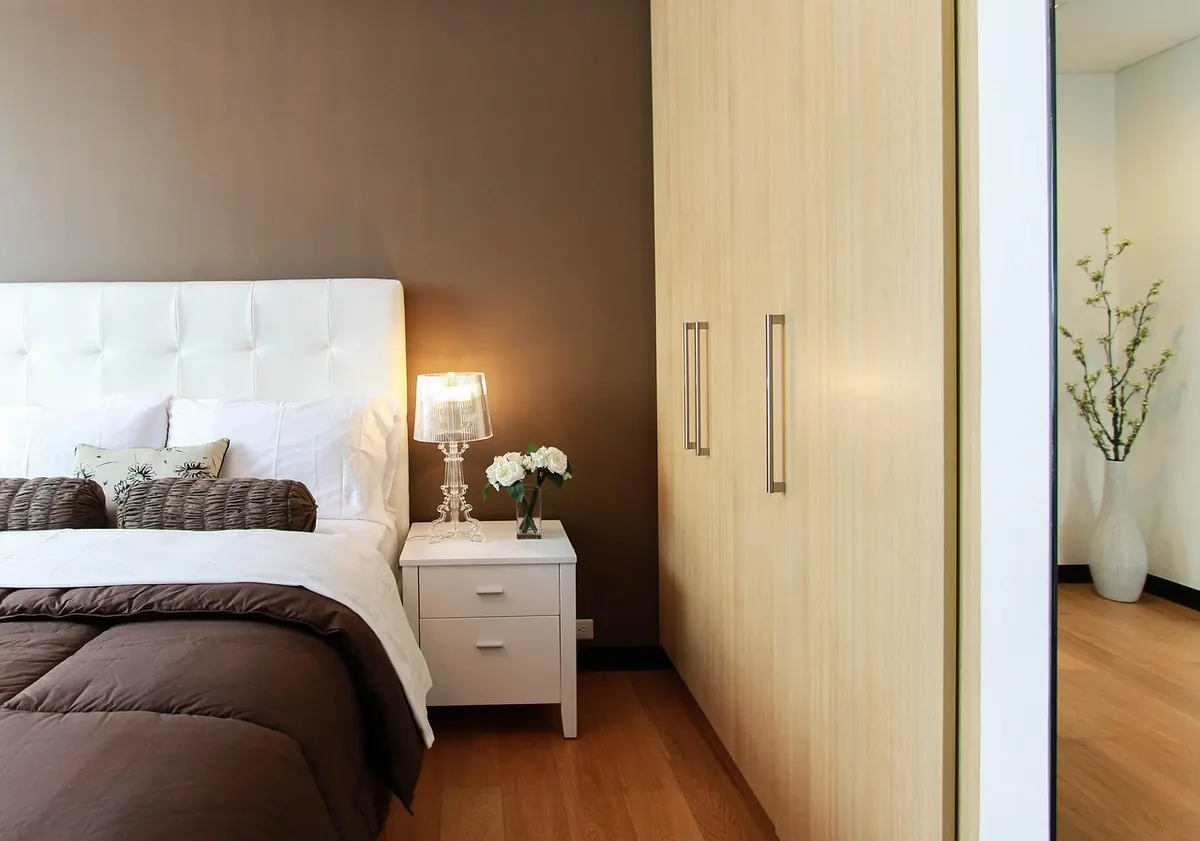
A lamp can look perfectly proportioned in a shop and then turn into a glare machine the moment it lands on your bedside table. Usually the style isn’t the problem — the size is. Get the height, shade and base proportions right and almost any lamp will feel as though it was made for the spot it sits in. Get them wrong and you’ll spend every evening tilting your head away from the bulb.
Before you measure a single lamp, measure the space it has to live in. Four numbers matter most:
Those measurements do most of the work. A lamp that fits its surface will almost always look right in the room, too.
Sit where you normally sit to read, with the lamp in place, and look straight ahead. The lower rim of the shade should fall roughly level with your eyes, or a touch below. That single check stops the two most common bedside complaints: light shining straight into your face, and a pool of brightness so narrow you have to hold the book at an angle.
As a general guide, if your bedside table is a standard 55–65 cm tall, a lamp of 45–60 cm total height will usually land in the right place. On a lower chest of drawers or a child’s bedside table, look for something around 35–45 cm. Rather than chasing a fixed figure, add the table height to the lamp height and check where the shade ends up relative to your seated eyeline.
Shade width matters as much as height here. Bedside shades of roughly 25–35 cm in diameter spread light across a page and a lap; anything much narrower concentrates it into a spotlight. A wider, shallower drum shade throws light up and down, which softens the contrast between page and room.
A desk lamp has a job to do, so it should be sized around your working position rather than the desk’s footprint. When you’re seated and looking straight ahead, the light source should sit at or just below eye level, angled down towards the work. Higher than that and you’ll see the bulb reflected in a monitor; lower and the light skims across the page, casting shadows from your own hand.
For most desks, a total height of 35–50 cm works well, with an arm or mast that lets you position the head roughly 40–50 cm from the page. That distance keeps the light even rather than harsh. If your desk is small or shared with a keyboard and monitor, a clamp-on lamp with a slim base frees up valuable surface — a weighted base of 15–20 cm diameter is a fair compromise when you need something free-standing.
Check the reach of the arm, too. A short arm on a deep desk means you’ll be leaning towards the lamp all evening; a long, articulated arm lets you push the light back when you’re not using it.
Once the height is right, the relationship between shade and base decides whether a lamp looks considered or cobbled together.
A shade that’s too wide makes the base look flimsy. Too narrow and the lamp looks top-heavy, like a mushroom on a stalk. If you’re swapping a shade on a lamp you already own, take the base with you and hold shades up against it — proportions are far easier to judge in the hand than on a screen.
You don’t need to buy two lamps to find out which fits. Stack books on the table until they reach the lamp’s listed height, sit down in your usual spot and see where that stack sits against your eyeline. Repeat at a couple of centimetres higher and lower. It feels faintly ridiculous and it saves a return.
If you already own a lamp that’s slightly wrong, adjust before replacing. A smaller shade will reduce visual weight on a tall base; raising the shade a few centimetres, where the fitting allows, changes how light spreads across the room. A plinth or a sturdy riser can lift a short lamp, though only if the base is heavy enough not to topple. And a different bulb — a globe rather than a spot — can warm up a lamp that feels too directional.
Also check the practical details while you’re measuring: can you reach the switch from bed or from your chair, is the cable long enough, and does the base feel steady if you brush past it?
If you keep nothing else, keep these. The lower rim of the shade should sit at or just below your eyeline when you’re seated in the place you use the lamp. The shade should be wider than the base and sized to the job — around 25–35 cm for bedside reading, 15–25 cm for a desk. And the base should take up no more than about a third to a half of the tabletop depth, leaving you somewhere to put your book down.
Get those three right and the lamp stops being an object you notice and starts being the reason the corner of the room works.
Photo: Pexels / Pixabay
A practical UK guide to getting porch, path and patio lights through winter — IP ratings, seals, timers...
A practical checklist for lighting a child's bedroom well — covering safety, night lights,...
Confused by smart bulbs? Here's how hubs, apps, voice control, dimming and UK fittings such as B22 and...