
Winter-Proof Your Outdoor Lighting: A UK Checklist for Porches, Paths and Patios
A practical UK guide to getting porch, path and patio lights through winter — IP ratings, seals, timers...

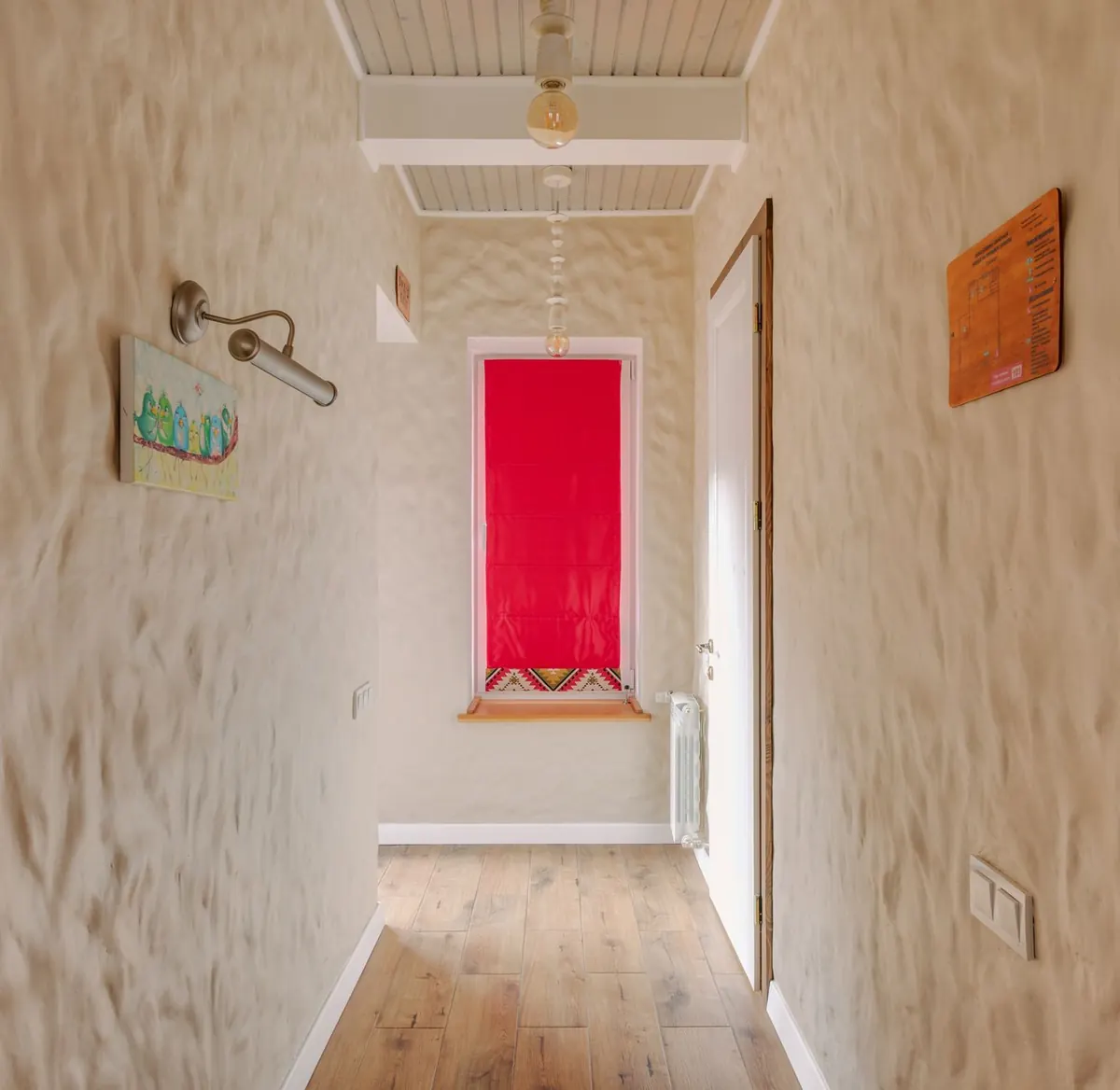
A narrow hallway rarely fails because of its width. It fails because of its light. One ceiling point, a bulb chosen for the box rather than the room, and a dark floor add up to a corridor that feels like a tunnel. Change the lighting and the same space reads as a proper room, one you walk into rather than through. The method is layering: light the walls, the ceiling and the floor separately, and keep every fitting shallow. Nothing here needs a big budget, and most of it can be done in an afternoon.
Wall lights are the single best investment in a tight hallway, because they push light sideways across the space instead of straight down the middle of it. A pair of slim uplighters washing the ceiling makes the hallway feel taller and wider at the same time, and they take up no floor space at all.
As a general guide, mount them about 1.7 to 1.8 metres from the floor, roughly at eye level, so the light sits beside you rather than above you. If your hall is longer than about four metres, space fittings two to two and a half metres apart, and consider putting them on their own switch, separate from the ceiling light. That way you can use a soft wash of wall light in the evening and add the ceiling only when you need to find your keys.
Avoid anything that projects more than about 15 centimetres from the wall, and check the projection measurement before you buy. In a hallway you brush past walls constantly, and a shade that sticks out will collect shoulders and coats.
Anything that hangs is a problem in a narrow hall. As a rule, keep the lowest part of a fitting at least 2.1 metres above the floor so nobody ducks. Flush and semi-flush fittings sit close to the ceiling and disappear visually, which is exactly what you want.
Instead of one central light, try two or three small flush fittings in a line along the hallway. Repeating small points of light break up the length of the space and make it read as a series of shorter, friendlier areas. If you prefer downlights, run them along the sides of the ceiling rather than down the centre, angled to wash the walls. A row of scallops marching down the middle of a narrow hall only emphasises how narrow it is.
This is where most hallways go wrong. Cool white bulbs, anything around 4000K and above, make small spaces look clinical and turn wood, skin and paint grey. Warm white, between 2400K and 2700K, is far kinder and makes a hallway feel like part of the home.
For brightness, a rough starting point is 100 to 200 lumens per square metre of floor area, then adjust by eye. Small halls usually need less than people expect, especially once wall lights are doing some of the work. If you're fitting LEDs, look for ones labelled dimmable and pair them with a compatible dimmer. Dimming is what turns a hallway light from purely functional into something you're happy to leave on.
Two more details worth checking: a colour rendering index (CRI) of 90 or above, so colours look natural, and warm-dim bulbs if you like the idea of light growing softer as it goes down.
A mirror doesn't create light, but it copies what's there, and in a hall with one weak ceiling point that matters. Hang one where it can catch something worth reflecting: a window in a nearby room, a wall light, or the glow through the front door glass.
Position matters. Beside a wall light usually looks and works better than directly opposite it, where you risk a hot spot of glare. A mirror at the far end of a hall will bounce daylight down the length of the space on a bright morning. Aim for the centre of the mirror at roughly eye level, around 1.5 to 1.6 metres from the floor, so it reflects the room rather than the ceiling.
In very narrow halls, a tall, slim mirror above a shallow console adds depth without eating floor space. Two smaller mirrors either side of a doorway can work just as well as one large one.
Light behaves differently depending on what it lands on. Pale floors, white ceilings and mid-tone walls bounce light back into the room; dark floors and busy patterned wallpaper swallow it. You don't need to redecorate, but a light-coloured runner and a coat of white on the ceiling will do more for the feeling of space than an extra light fitting.
Gloss paint reflects more, but it also shows every lump and brush mark, and glare in a tight space is tiring. Eggshell or a soft matt finish on the upper walls, with something washable below hand height, is usually the practical answer. If the door at the end of the hall is solid, a half-glazed replacement, or simply a glazed panel above it, will let borrowed light through from the room beyond.
One practical note: swapping a ceiling fitting or a wall light on an existing circuit is straightforward, but new wiring, extra sockets and anything involving the consumer unit are jobs for a registered electrician.
Good hallway lighting should work without you thinking about it. Two-way switching at each end of the hall saves walking back to turn a light off. A dimmer on the wall lights lets you keep a low glow going in the evening. And if you're often up in the night, a small plug-in light or a low-level fitting near the floor gives you enough to see by without waking the house.
Start with the wall lights. They cost far less than a new floor, take a couple of hours to fit, and change a narrow hallway more than anything else you could do in the space.
Photo: Max Vakhtbovych / Pexels
A practical UK guide to getting porch, path and patio lights through winter — IP ratings, seals, timers...
A practical checklist for lighting a child's bedroom well — covering safety, night lights,...
Confused by smart bulbs? Here's how hubs, apps, voice control, dimming and UK fittings such as B22 and...