
Winter-Proof Your Outdoor Lighting: A UK Checklist for Porches, Paths and Patios
A practical UK guide to getting porch, path and patio lights through winter — IP ratings, seals, timers...

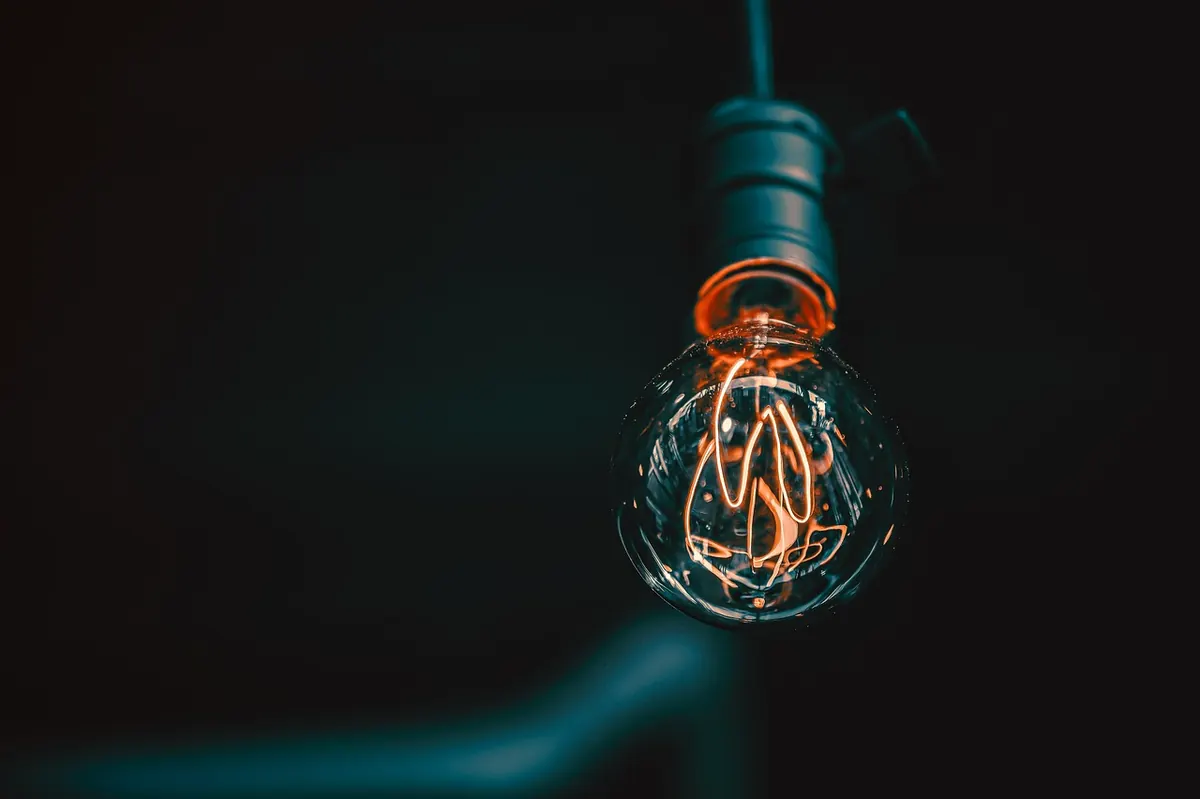
You've taken the old bulb out, you're standing in the shop, and every box in front of you says something like E27 or GU10. It reads like a code, and it is one — but a short, sensible code that tells you exactly which fitting the bulb will go into. Learn to read it and choosing a bulb stops being guesswork and becomes a ten-second decision.
The code is simpler than it looks. E means Edison screw, the screw-in type. B means bayonet, the push-and-twist type. G covers the pin caps, where two small pins do the work. The number is a measurement in millimetres: E27 is a screw cap 27mm across, B22 a bayonet cap 22mm across, GU10 a pin cap with 10mm between the pins. Remember that and most of the confusion disappears.
E27 is the workhorse. It's the chunky screw thread on most pendant lights, table lamps, floor lamps and standard ceiling fittings, including a great many fittings made for the wider European market. In the UK, an E27 bulb runs directly on mains voltage, so there's no transformer tucked away to worry about.
Shapes that use it include the classic GLS bulb, candle bulbs for chandeliers, globes for open fittings, and the filament-style bulbs that look so good over a kitchen island where the bulb is on show. Its smaller sibling is E14, sometimes sold as SES or "small screw". If the cap is narrower than your thumb, it's probably E14 — found in chandeliers, slim table lamps, some wall lights and the odd cooker hood.
Bayonet caps look like nothing else: two small pins either side of the cap, a push and a quarter-turn to lock them in. B22, also written BC, is the traditional British standard, which is why it's still everywhere in older housing. Hallway pendants, bedroom ceiling lights, wall lights and plenty of lampshade fittings will take a B22. B15, or SBC, is the small bayonet version used in smaller decorative and wall fittings.
Both run on mains voltage, same as the screw caps, so voltage isn't the issue here. The one rule is never to force anything. A screw bulb will not go into a bayonet holder, and if you try hard enough you'll bend the contacts inside and turn a bulb problem into a fitting problem.
This is where most people come unstuck, because two pin caps can look similar from a metre away and behave completely differently.
GU10 is the twist-lock spotlight: two fat pins about 10mm apart, twist to lock, mains voltage, no driver needed. It's the standard for kitchen downlights, bathroom spotlights and track lighting.
GU5.3, usually sold as MR16, has two much thinner pins 5.3mm apart and is normally a 12V bulb. That means there's a transformer or driver somewhere above the ceiling, and it has to suit the bulb. The pins are deliberately different sizes so the two can't be swapped by accident — don't try to make them fit.
G9 has two small looped pins 9mm apart and turns up in bathroom mirror lights, display cabinets and some decorative spotlights. G4 is the tiny 4mm version, often 12V, used in under-cabinet and display lighting.
Once the cap matches, the rest is straightforward. Ignore wattage as a measure of brightness and look at lumens instead: roughly 800 lumens gives about the light of an old 60W incandescent while drawing well under 10W. Never exceed the maximum wattage printed on a fitting, though with LED you'll rarely come near it.
Colour temperature matters more than most people expect. Around 2700K gives a warm, cosy light for living rooms and bedrooms; 4000K is crisper and suits kitchens, bathrooms and workspaces. Keep the bulbs in one room at the same colour temperature, or the mismatch will be obvious the moment they're switched on together.
If you have a dimmer switch, check two things: that the bulb is marked dimmable, and that the dimmer is compatible with LED. Older dimmers designed for halogen often buzz or flicker with LED bulbs, and smart bulbs generally prefer a plain on/off switch. Enclosed fittings — the ones with a glass diffuser sealing the bulb in — need a bulb rated for enclosed use, as some LEDs dislike trapped heat.
Match the cap first, then brightness in lumens, then colour temperature, then physical size. A large LED bulb can be surprisingly wide at the base and may not squeeze inside a narrow shade or a sealed fitting, so check the dimensions against the space you have.
If you're replacing a light fitting rather than a bulb, run the same check in reverse and confirm which cap the new fitting takes before you commit to a batch of bulbs. And buy one spare. It's a small expense that turns the next failure into a thirty-second job rather than a wasted evening.
Photo: AJS1 / Pixabay
A practical UK guide to getting porch, path and patio lights through winter — IP ratings, seals, timers...
A practical checklist for lighting a child's bedroom well — covering safety, night lights,...
Confused by smart bulbs? Here's how hubs, apps, voice control, dimming and UK fittings such as B22 and...